
Harvesting
Throughout the history of the Métis Nation, our people have relied on the bounty offered by Mother Earth.
As our Nation evolved throughout the great expanse called Canada, our citizens hunted, fished, and gathered plants to ensure the survival of our families.
As John Palliser remarked in 1857, “this pemmican harvest of their buffalo hunts was brought in for trade by the Indians of the Plains and the Half Breeds of Red River who organized with military discipline under their leader, the warden of the Plains, who went out on the Prairies every year on two tremendous buffalo hunts.”
The 1924 testimony of Elder Patrice Fluery noted that the location of present day Saskatoon was a primary buffalo hunting ground called “Bois de Fleche.”
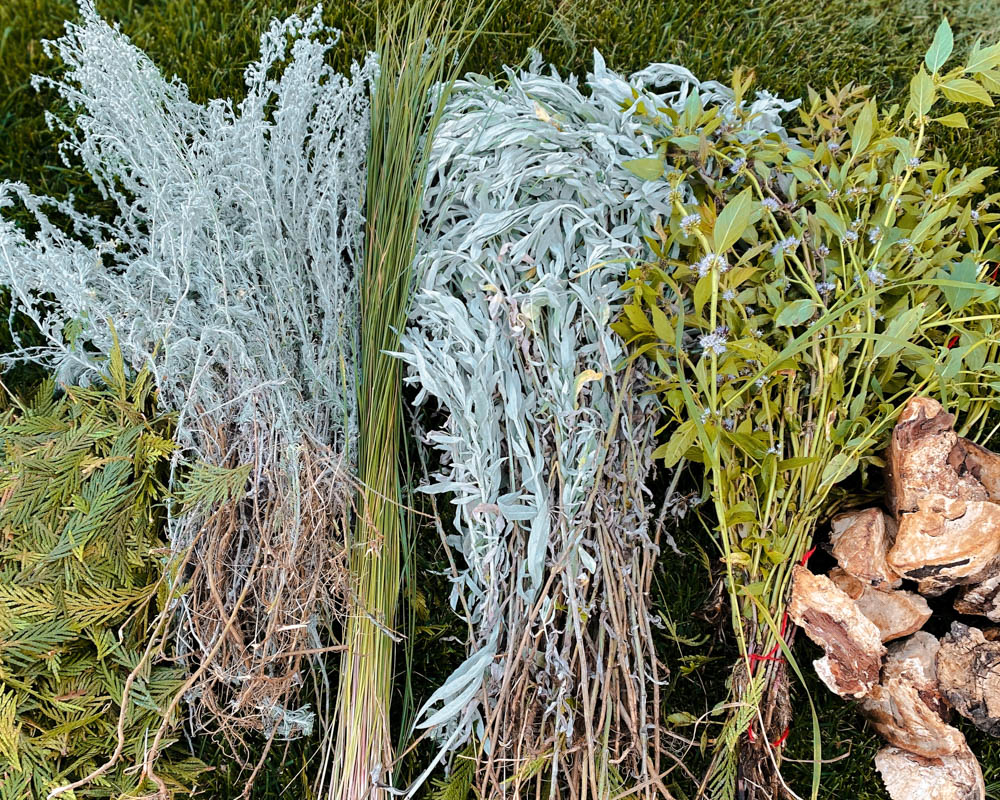
As in the past, harvesting from Mother Earth remains an integral tradition of our Nation that we inherited from our ancestors. In the North, the people of the two oldest Métis communities, Île-à-la-Crosse and Cumberland House, continue to this day to provide sustenance for their families by hunting, fishing and gathering wild rice, berries and using traditional medicinal plants.
Over the past four years, Métis Nation-Saskatchewan has embarked on an ambitious process of discussions with the Government of Saskatchewan over the issue of harvesting. We are working with many institutions, groups, and the federal and provincial governments to ensure that our tradition of harvesting will continue and be practiced by future generations of Métis citizens.
Harvesting Memorandum of Understanding
In November 2010, MN-S and the Province of Saskatchewan signed a Memorandum of Understanding (MOU) on Métis harvesting rights. The MOU addresses the negotiation of several key actions needed for an interim and ultimately final agreement between the parties on issues regarding:
- Métis community and Métis traditional territories;
- Métis food harvesting customs, practices and traditions;
- Ancestral and community acceptance requirements necessary to be a beneficiary of harvesting rights;
- Achieving legal enforceability and certainty of those rights; and,
- The identification of additional research or studies necessary to assist MN-S and the Province of Saskatchewan to reach interim and final agreements.
Métis Parameters Currently Guiding Métis Harvesting for Food in Saskatchewan
The rights of Métis harvesters are determined by four legal decisions: the Supreme Court of Canada decision, R. v. Powley (2003), and three provincial decisions, R. v. Morin & Daigneault (1966), R. v. Laviolette (2005), and R. v. Belhumeur (2007).
R. v. Powley confirmed, through section 35 of the Constitution Act, 1982, the Métis right to harvest, while emphasizing the need to develop a more systematic method of identifying people of Métis ancestry. The MN-S response to this was the development of a secure and objectively verifiable citizenship card which proves Métis ancestry and ancestral connections to the Métis homeland. It is NOT a provincial Métis harvesting card.
Powley set out the criteria for determining who can exercise that right:
- You must self-identify as Métis
- You must be ancestrally connected to an historic Métis community
- You must be accepted as a member of a modern Métis community that has evolved from an historic Métis community.
In 1996, with the R. v. Morin & Daigneault decision, the Métis of North-West Saskatchewan (those living north of the Northern Administrative District boundary) had their constitutional right to harvest for food recognized.
The release of the R. v. Laviolette decision also recognized a rights-bearing Métis community throughout North-West Saskatchewan (East from Lac la Biche to Île-à-la-Crosse, south to Green Lake, southwest to Meadow Lake, and northwest to Lac la Biche) and members of that rights-bearing Métis community can harvest throughout their traditional territory.
Despite the R. v. Belhumeur decision, in which Donald Belhumeur of Regina was found not guilty of fishing without a licence in the Qu’Appelle Valley, the Saskatchewan Ministry of Environment has maintained the approach that Métis food rights are unclear. This means that Métis harvesting cases will be assessed on a case-by-case basis, i.e. Métis harvesters in the southern region of the province may be charged if caught.
In summary, harvesters must be aware that:
- They can only harvest in areas where a harvesting court case has been won
- They must satisfy the criteria set out in R v. Powley
- In all other areas of the province, Métis assertions of these rights are considered on a case-by-case basis, and are subject to investigation and possible prosecution.
If you decide to harvest for food, MN-S recommends that you:
- Obtain a provincial Métis citizenship card for identification purposes should you be approached by a Conservation Officer
- Ensure that you have written and verbal permission to hunt on any private or First Nations lands
- Follow safety and conservation laws while harvesting
Strengthening Métis Harvesting Traditions Through Education & Partnership
Hunting and harvesting have always played a significant role in Métis culture — not only as a means of providing for families, but as a way of maintaining our deep connection to the land, community, and traditional knowledge. Rooted in respect, self-sufficiency, and responsibility, these teachings continue to guide our Nation today.
Métis Nation–Saskatchewan (MN–S) is proud to announce the implementation of a Memorandum of Understanding (MOU)with the Saskatoon Wildlife Federation, signed in March 2025, reinforcing our shared commitment to conservation, cultural education, and safe, ethical hunting practices.
Program Opportunity for Registered Métis Citizens
Under this agreement, registered Métis citizens in Saskatchewan can access Hunter Safety, PAL, and RPAL certification courses offered by the Saskatoon Wildlife Federation with all course fees waived through MN–S support.
Program Includes:
- Hunter Safety Training
- PAL & RPAL Certification
- Course Fees Fully Covered for Métis Citizens
- Sessions Hosted by the Saskatoon Wildlife Federation in Saskatoon
Check upcoming classes and event availability
Community Hosting Opportunities
As individual travel expenses are not included in this agreement, communities that wish to host a course locally can connect directly with the Saskatoon Wildlife Federation to discuss scheduling and delivery options tailored to their region.
Contact the Saskatoon Wildlife Federation
Continuing Our Responsibility to the Land
This partnership reflects our Nation’s values of stewardship, cultural continuity, and community service. By removing barriers to safety training and certification, MN–S is helping citizens practice harvesting rights responsibly, proudly, and in alignment with Métis tradition.
Together, we ensure that our harvesting practices remain strong for future generations — grounded in safety, knowledge, and respect.