
New Events at Batoche Cement Title ‘People of the Horse’
“That’s what makes a good Indian Relay rider, becoming one with the horse.” - Elder Ivor Wayne Burns – Indian Relay team owner
A favorite at the Back to Batoche Days festival, the Indian Relay is among the events at the Vermette Raceway. And there’s some exciting new additions to the line-up this year, all bring Métis tradition to a new generation.
History carried forward
When horses were introduced to North America in the late 1600’s, Indigenous people quickly developed a profound connection to the animals. The Métis became incredibly adept riders, bareback marksmen, and hunters. The taming and training methods are still used today. That relationship to the horse is why Métis were bestowed with the title ‘People of the Horse’.
“In Cree, we call them mistatim…that means big dog. We used to use dogs for carrying goods around, teepees and stuff like that.”

Elder Ivor Wayne Burns has almost a visceral response when he speaks of the magnificent animals. He’s been working with horses since he was six years old and says he learned his taming techniques from his father and grandfather.
“We didn’t buck them out, we broke them with kindness. We broke them with trust and loving. They have no trust for you, they have no loyalty for you. You have to earn that trust and that loyalty from a horse. When they got close enough to us, we breathed into their nostrils. They can smell trust, kindness, caring and sharing. When they trust you, then they’re easy to work with.”
At age 14, Elder Burns was wagon racing – then came his life-long passion for the Indian Relay. Having seen wins and losses over the span of his career, the now 71-year-old watches his grandsons heat up the track and bring home the buckles. He’s passed along what he learned so many years ago from his grandfather and is a mainstay at the annual Batoche festival.
New events bring more excitement to Batoche
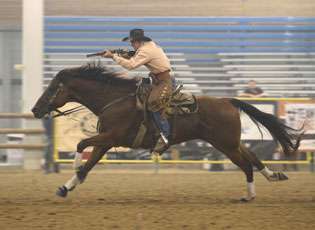
Mounted shooting is a new addition to the cultural and sporting lineup, bringing time-honoured Métis horsemanship to modern-day competition. During the traditional buffalo hunt, Métis marksmen relied on their highly trained horses to run into a chaotic herd, leaving their hands free to load and shoot their long guns at a full gallop. That deep connection between man and horse can still be seen at Batoche.
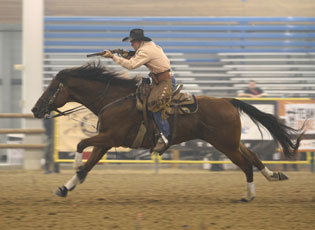
“It’s fun to bring an old west tradition into a modern new building.”
President of the Saskatchewan Cowboy Mounted Shooting Association (SCMSA), Lucas Thiessen says mounted shooting dates back to the Batoche resistance and a fighting tactic of Gabrielle Dumont’s. Thiessen believes the tradition became sport in the 80’s.
“There was group of them in Arizona, and they started setting up bottles in cactuses in the desert and we use blank ammunition now but when they started, they were using live ammunition and they would run through the desert and shoot bottles out of cactuses…..I tried it and I went home and ordered a set of guns to use in it.”
Raised in a horse training family himself, Lucas started riding competitively 12 years ago. Today, he’s among the elite riders running the course in under nine seconds. Interestingly, the sport is dominated by women. Thiessen watches his 4-year-old daughter, Remi ride, shooting with her cap gun. Mounted shooting is on the decline in Canada, because Canadian gun laws ban the import and sale of six shooters, even without ammunition.
Watch and listen as Lucas Thiessen describes Mounted Shooting here.
Both Indian Relay and Mounted Shooting showcase the traditional Métis “running start” technique, a practice that originated during the historic bison hunt. Métis hunters would wait for the official signal before charging at full gallop into the herd. Remove the bison, and the concept closely resembles flat racing – another new event featured at the Vermette Racetrack in Batoche. Flat racing typically relies on Thoroughbreds, horses renowned for their speed and stamina, while success also depends on the skill, strength, and strategy of their riders.
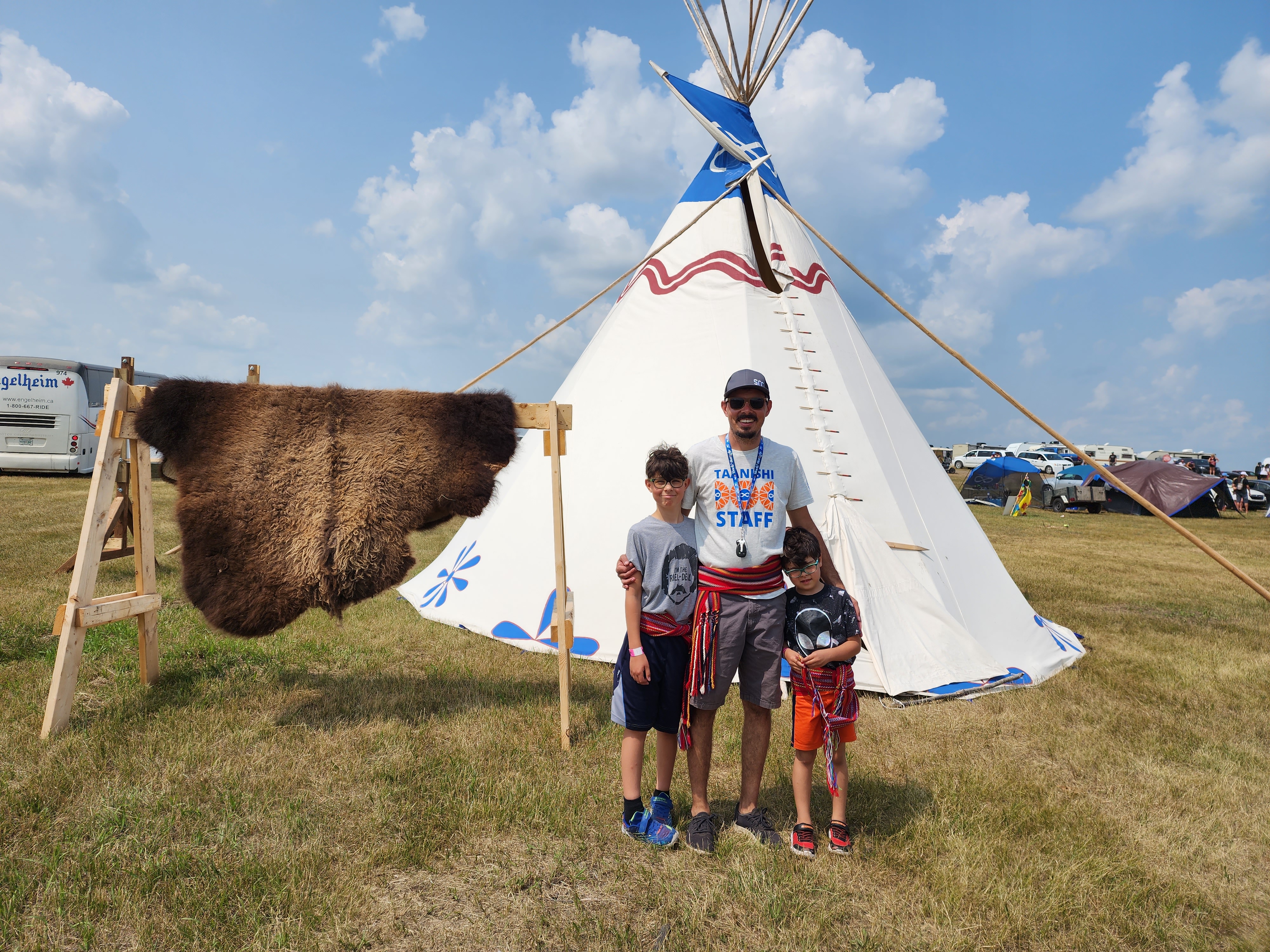
MN–S Environment Director and Batoche track lead w/family at Batoche 2025
Batoche track lead, Brent Laroque said, “After every festival, events are assessed and new events are considered for potential adds the next time. Flat racing and Mounted Shooting are based on Métis culture, not to mention the fact they’re action packed. So, it’s a great way to enhance the Batoche experience and grab the attention of the kids. They’re the next generation and it gives them a new appreciation of their history.”
With the excitement at the Vermette Raceway kicking up another notch, you won’t want to miss a minute of the action. See you at the track!
Vermette Raceway Schedule – Back to Batoche Days 2026
(all times are weather reliant)
Thursday July 16
2pm - NWSCCA Chariots
4pm - NWSCCA Chuckwagons
6pm - CPCA Chuckwagons
Friday July 17
12:30pm - NWSCCA Chariots
2:30pm - NWSCCA Chuckwagons
4:30pm - Flat Races
5:00pm - Mounted Shooting
6:00pm - CPCA Chuckwagons
7:30pm - Indian Relay
Saturday July 18
12:30pm - NWSCCA Chariots
2:30pm - NWSCCA Chuckwagons
4:30pm - Flat Races
5:30pm - CPCA Chuckwagons
7:00pm - Indian Relay
Sunday July 19
1:00pm CPCA Chuckwagons
2:30pm CPCA Award Ceremony
3:00pm Flat Races
3:00pm Indian Relay
For complete Back to Batoche details, go to backtobatoche.ca.